
5 Warning Signs Your Yard Has a Drainage Problem
Water is the single most damaging force on any property. When drainage is working properly, you never notice it. When it is not, the signs show up fast and get worse every season. For homeowners across Simcoe County, Barrie, and Muskoka, poor drainage is one of the most common and most costly property problems we see.
The good news is that most drainage problems are fixable. The key is catching them before they escalate into foundation damage, structural erosion, or wholesale landscaping failure. Here are five signs that your yard has a drainage problem and needs professional attention.
1. Water Pooling in Your Yard After Rain
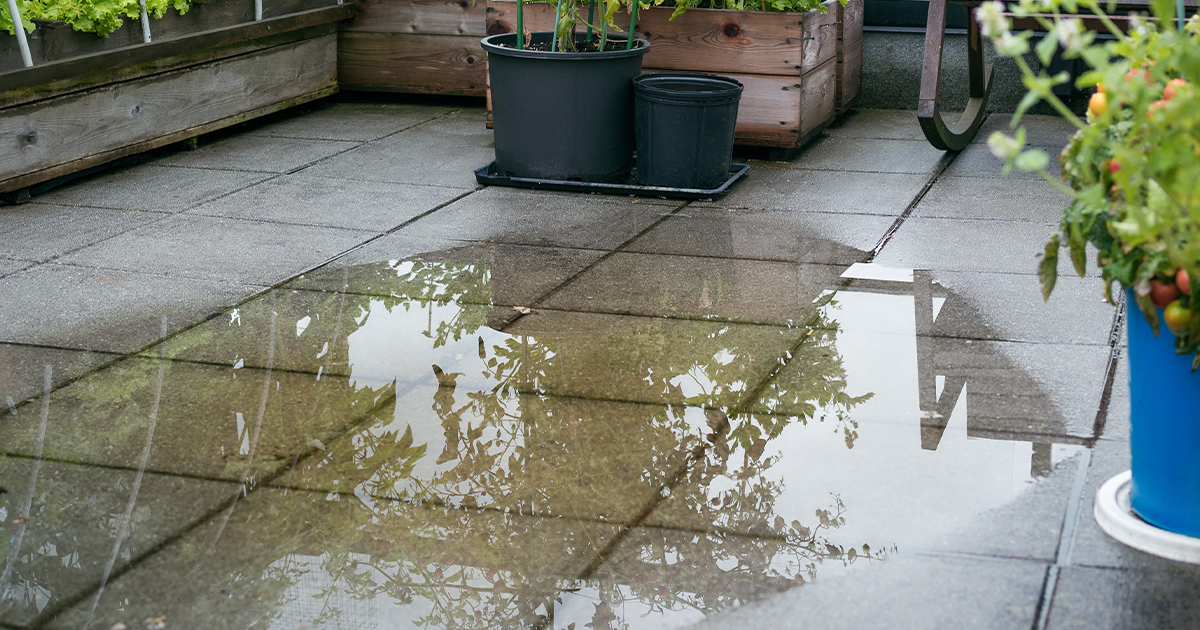
If puddles form in the same spots every time it rains and take more than a few hours to disappear, your yard is not draining properly. Healthy soil absorbs and redirects water within a few hours of a normal rain event. Persistent pooling means your grade is directing water into low spots with nowhere to go, your soil is too compacted or clay-heavy to absorb water, or your lot lacks a drainage outlet entirely.
Left untreated, standing water drowns grass roots, creates muddy unusable zones, attracts mosquitoes, and puts hydrostatic pressure on your foundation. In Simcoe County, where clay soils are common, this is one of the most frequent drainage complaints we respond to.
2. A Soggy or Spongy Lawn That Never Fully Dries
A lawn that feels like a wet sponge underfoot well after rain has stopped is a sign of subsurface drainage failure. The water table below your grass is staying elevated because it has no path to drain. Grass roots need oxygen to survive. When they are constantly surrounded by saturated soil, you will see yellowing, thinning, and eventual die-off in specific patches.
This issue often develops gradually as soil compacts over years. If your yard used to drain fine and now it does not, compaction or a blocked drainage path is often the cause. Proper grading and subsurface drainage work restores healthy water movement through the soil profile. This type of work is closely related to the site preparation we do as part of
residential excavation on properties across Barrie and Muskoka.
3. Erosion and Washout on Slopes or Garden Beds
When water moves too fast across a slope rather than soaking in gradually, it strips topsoil, creates gullies, and exposes roots. You will notice bare patches where soil has washed away, sediment collecting at the bottom of slopes, and garden beds that look like they have been disturbed after every storm.
Erosion is a sign that your property's grade is directing water at too steep an angle without adequate ground cover or drainage infrastructure to slow it down. Over time, this damages not just your landscaping but also any hardscaping structures like patios, walkways, and retaining walls that depend on stable soil behind and beneath them.
4. Water Seeping Into Your Basement or Crawl Space
If your basement smells musty, shows water stains on the walls, or accumulates moisture after rain, the problem is almost certainly starting outside. Water pooling against your foundation or graded toward your home instead of away from it will eventually work its way through the concrete.
Before investing in interior waterproofing systems, fix the exterior drainage. Re-grading the soil around your foundation so it slopes away at a minimum of two percent over the first ten feet is the single most effective thing you can do to keep your basement dry. This is a core part of what we address during residential excavation and grading projects.
5. Algae, Moss, or Standing Water Near Your Foundation
Algae and moss growing on your foundation walls, steps, or hardscaping near the house are signs of chronic moisture. These organisms only grow where water is consistently present. If you see green or black growth along the base of your home, on your walkways, or on your retaining walls, your drainage is keeping those surfaces wet far longer than they should be.
This is both an aesthetic problem and a structural one. Chronic moisture accelerates the deterioration of concrete, stone, and wood. It also signals the same foundational drainage issue that, left alone, will eventually lead to water infiltration inside your home.
What to Do When You Notice These Signs
The first step is a professional site assessment. A trained eye can identify the source of your drainage problem in a single visit. At Superior Property Group, we evaluate your property's grade, soil conditions, surface flow patterns, and any existing drainage infrastructure before recommending a solution. In many cases, re-grading combined with strategic planting or hardscaping improvements addresses the problem entirely without major excavation.
For properties with more significant issues, including low lots, heavy clay soil, or sites near water, a more comprehensive grading and drainage plan is needed. This work often ties directly into other improvements like lot clearing or new landscape installation, where we establish proper drainage as part of a full property refresh.
We serve homeowners and property owners across Barrie, Simcoe County, Oro-Medonte, Muskoka, Midland, Severn, Vaughan, and the Greater Toronto Area.
Noticed any of these signs on your property? Contact Superior Property Group for a free consultation. We will assess your drainage, explain your options clearly, and build a plan that solves the problem at the source.
Frequently Asked Questions
How much does it cost to fix yard drainage? Costs vary based on property size, soil conditions, and scope. Simple re-grading projects can be very affordable. More complex drainage systems cost more. A site visit gives you an accurate number.
How long does drainage work take? Most residential drainage projects are completed in one to three days. Larger properties or more complex drainage systems may take longer.
Will fixing drainage damage my existing landscaping? Our team works to minimize disruption to existing plantings and features. In some cases, landscaping needs to be temporarily disturbed to correct grading, but we restore the site as part of the project.
Does drainage work need a permit? Most grading and drainage work does not require a permit in Simcoe County or Muskoka. Our team reviews any local requirements as part of project planning.
Superior Property Group | Simcoe County, Muskoka and the GTA | superiorpropertygroup.ca
