
From Raw Land to Outdoor Living Space: A Project Walkthrough
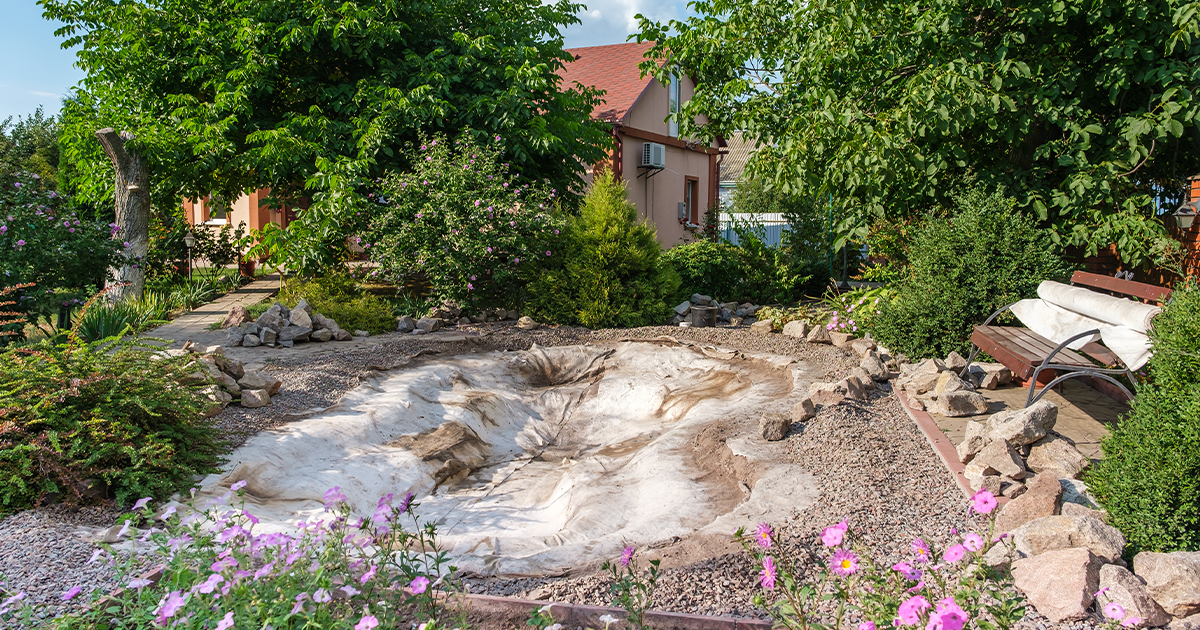
Some of the most satisfying projects we take on at Superior Property Group start with nothing. Not a neglected lawn or an overgrown garden, but raw, undeveloped land. An overgrown lot that has not been touched in decades. A new build site where the construction crew left behind compacted subsoil, tire ruts, and debris. A Muskoka property where the bush runs right to the back door.
Transforming that kind of land into a finished, liveable outdoor space is a multi-phase project that draws on almost everything we do, including clearing, excavation, grading, hardscaping, landscaping, and drainage. It is also the kind of project that most homeowners have no roadmap for. Where do you even begin?
Here is a walkthrough of how a complete property transformation project typically unfolds, from the first site visit to the finished space.
Phase 1: Vision and Site Assessment
Every project starts with a conversation about what the client wants the finished property to look like and how they want to use it. A family that wants a safe, open yard for children to play in has different needs than a couple who wants a sophisticated outdoor entertaining space with a patio, fire feature, and planted garden borders. A Muskoka property owner who wants to preserve a natural, wooded feel while creating usable outdoor space has entirely different requirements than someone who wants to maximize a flat suburban lot.
After the vision conversation, our team walks the property in detail. We assess existing vegetation, terrain and slopes, soil conditions and drainage patterns, sun and shade exposure, access points for equipment, proximity to utilities and structures, and any features worth preserving. This assessment, combined with our digital site planning process, gives us a clear picture of what the project actually involves and allows us to give the client an accurate scope, timeline, and budget before any work begins.
Phase 2: Clearing
For raw or heavily overgrown land, clearing is the first physical phase. This is where trees, brush, stumps, and debris are removed to expose the land beneath. Our full breakdown of what this involves, including permits, timelines, and what to expect, is covered in our dedicated guide on lot clearing in Ontario.
We approach clearing with a selective mindset rather than a bulldoze-everything approach. Mature trees that contribute to the character and privacy of the property are preserved wherever possible. Natural features that align with the design vision, a rocky outcrop, a slight rise, a natural low point that could become a pond location, are noted and incorporated into the plan rather than simply removed.
After clearing, the site looks dramatically different. The real shape of the land becomes visible for the first time. This is often the moment when clients start to see the potential they could not visualize through the brush.
Phase 3: Excavation and Grading
With the land cleared, excavation and grading establish the physical foundation that everything else is built on. This phase is about shaping the land so water drains properly, structural elements have a stable base, and the finished property functions the way it should year-round. As we cover in detail in our post on how residential excavation sets the foundation for every outdoor project, this work is not just a preliminary step. It is the foundation of the entire outcome.
On a typical property transformation project, excavation and grading might include:
Re-grading the full lot to establish proper drainage slopes away from the home
Excavating for patio and hardscaping base preparation
Creating terraced levels on sloped properties
Installing weeping tile or French drains for subsurface drainage management
Cutting access for pathways, steps, and feature areas
This is also the phase where drainage issues are addressed permanently. If any of the warning signs of yard drainage problems are present, this is the stage where we engineer them out of the property for good.
Phase 4: Hardscaping
Once the ground is properly shaped and prepared, the structural elements of the outdoor space go in. Patios, walkways, retaining walls, steps, and stone features all define how the space is used. Hardscaping is installed on the compacted, properly graded base that the excavation phase created. This sequencing is non-negotiable. Hardscaping installed on improperly prepared ground will shift, settle unevenly, and fail over time regardless of the quality of materials used.
For many Simcoe County and Muskoka properties, the hardscaping phase is where the most dramatic visual transformation happens. A well-designed patio with natural stone, a set of broad stone steps descending a terraced slope, or a retaining wall that turns an unusable hillside into a level garden terrace all define the character and function of the outdoor space.
Phase 5: Landscaping
With structure in place, landscaping fills in the living elements: lawn establishment, garden beds, tree and shrub planting, ground cover, and naturalized areas. This is the phase that softens the hardscaping edges, adds colour and texture, and transforms a finished construction project into a space that feels organic and lived-in. For a clear breakdown of how landscaping and hardscaping relate to each other in a project like this, see our comparison of hardscaping vs landscaping.
Plant selection for Ontario properties needs to account for soil conditions, sun exposure, moisture levels, and the local climate. We choose species suited to the specific conditions of each property, plants that will establish well and thrive without constant intervention.
The Result: A Property That Looks Like It Was Always This Way
When a project like this is done well, the finished property does not look like it was recently developed. It looks like it was always meant to be this way. The clearing left the right trees. The grading flows naturally. The hardscaping feels like it grew from the landscape. The planting softens every edge.
That is the outcome we aim for on every project, whether it is a half-acre lot in Barrie or a five-acre property on the edge of Muskoka. The work is visible in the quality of the result, not in the marks left behind.
We serve property owners across Simcoe County, Muskoka, Barrie, Midland, Oro-Medonte, Severn, Vaughan, Richmond Hill, and the Greater Toronto Area.
Starting with raw or undeveloped land? Superior Property Group handles the full scope from the first site walk to the finished outdoor space. Contact us to schedule a free consultation and start building your vision from the ground up.
Frequently Asked Questions
How long does a full property transformation take? Timelines vary based on scope and property size. A straightforward residential lot transformation might take one to two weeks. Larger projects with significant clearing, grading, hardscaping, and landscaping can take four to eight weeks or more. We provide a detailed project timeline during planning.
Is it better to do the full project at once or in phases? Completing the full project in one continuous sequence is almost always better from a cost and quality standpoint. The ground and drainage work should always be completed in the first phase regardless. Phasing can make sense for budget reasons but adds mobilization costs.
What should I expect in terms of disruption during the project? Property transformation projects involve heavy equipment, material delivery, and significant ground disturbance. Our team plans equipment access carefully to minimize disruption and communicates the daily schedule throughout so clients always know what to expect.
Can I add a custom pond as part of a full property transformation? Absolutely. Pond excavation fits naturally into the excavation and grading phase of a full property project. Planning it as part of the overall scope rather than as a later add-on produces a better result and typically costs less overall.
Superior Property Group | Simcoe County, Muskoka and the GTA | superiorpropertygroup.ca
