
How to Plan a Major Landscaping or Excavation Project Before Spring
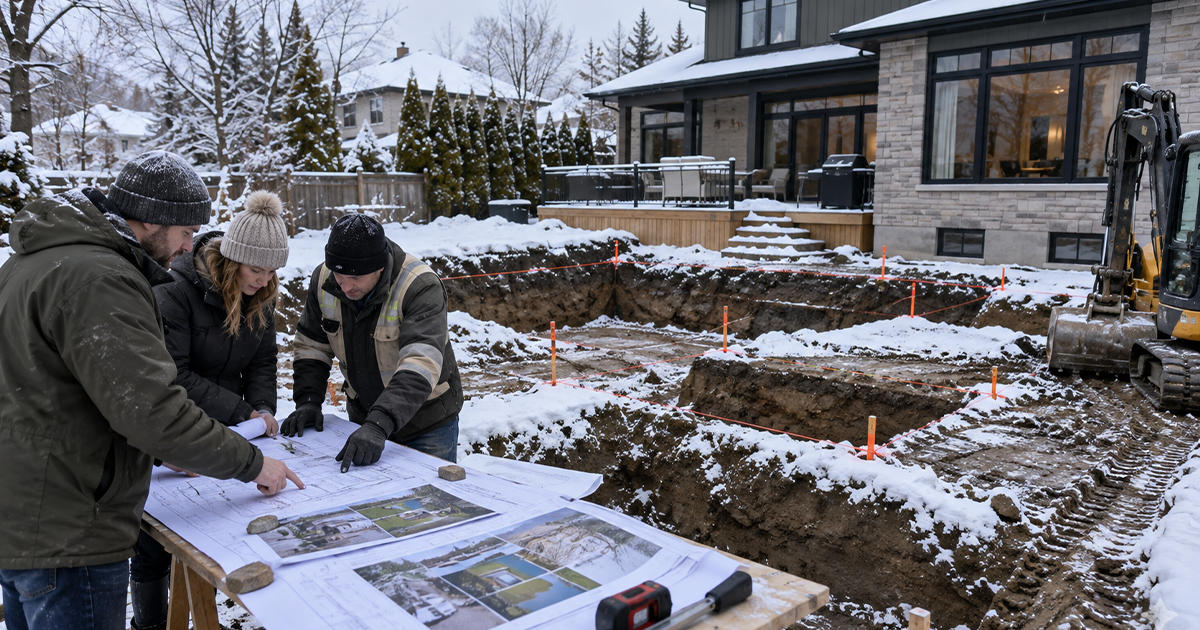
Most homeowners start thinking about their outdoor projects in April when the snow finally clears and the ground thaws. By that point, the contractors they want are already booked. The materials they need are on order for other jobs. And the project they have been thinking about all winter gets pushed to late summer or fall, which means another year goes by without it getting done.
The homeowners who get the projects they want, when they want them, are the ones who plan in fall and winter. This is not about rushing a decision. It is about using the months when outdoor work cannot happen to do the thinking and preparation that sets everything up to move fast when the season opens.
Why Fall and Winter Are the Right Time to Plan
Planning a major outdoor project is not a quick conversation. Getting a thorough site assessment, reviewing design options, understanding permit requirements, and arriving at a scope and budget you are confident in takes time. When you start that process in November or December, you have all winter to work through it properly without the pressure of a construction season ticking away.
You also get first access to spring scheduling. Excavation and landscaping contractors in Simcoe County and Muskoka typically fill their spring books over the winter months. A project planned and agreed in January is almost always in a better position on the schedule than one that calls in March hoping for a May start.
Step by Step: How to Plan Your Project This Winter
Get clear on what you actually want. Start with the outcome, not the method. What do you want your property to do that it cannot do right now? More usable outdoor space, better drainage, a new patio, lot clearing for a build, a custom pond. Getting specific about the end goal is what makes the planning conversation productive.
Book a site assessment before the ground freezes. A site assessment done in late fall is still a site assessment done on your property in real conditions. The contractor can see drainage patterns, access constraints, existing features, and terrain that may be hidden under snow by January. If you can get eyes on the property before freeze-up, do it.
Understand what permits your project may require. Some projects need approvals before work can begin. Septic installations, larger retaining walls, work near water, and significant tree removal all have permit requirements that can take weeks or months to process. Starting that process in winter means approvals are in hand by spring rather than holding up a project that is ready to go.
Review your design options and settle on a scope. This is the stage where digital planning tools become particularly valuable. Seeing the proposed grading, layout, and drainage design before committing to anything gives you confidence in what you are agreeing to. We cover exactly how this works in our post on how digital site planning prevents costly project surprises.
Confirm your budget and get a written quote. A formal written quote with a clear scope is what protects both you and the contractor. Review it carefully against what was discussed in the site assessment. Any discrepancy between what you thought was included and what is in the quote is worth clarifying before work begins.
Confirm your spring start date and get on the schedule. Once the scope and quote are agreed, confirm your position on the spring schedule. This is the step most people miss by waiting too long. Spring books fill from October onward.
What to Have Ready Before the First Conversation
You do not need to arrive at the first conversation with everything figured out. But having some basic information ready makes the process faster and the assessment more useful. Our full breakdown of what to prepare is in our post on getting a quote for excavation: what to prepare and what to expect. At a minimum, be ready with:
A description of what you are trying to accomplish
The property address and any relevant context about access or constraints
A rough sense of your budget range
Any hard timeline requirements, particularly if the project is tied to a build or permit
Questions about what the process will look like and what you should expect from start to finish
Projects That Benefit Most From Winter Planning
While all outdoor projects benefit from early planning, these in particular should be started over winter:
Foundation excavation tied to a spring build start
Septic installation or replacement, given the permit timeline
Lot clearing for new construction
Large grading and drainage correction projects
Full property transformations from raw land to finished outdoor space
Custom pond installations, where spring is the prime build window
Each of these has something in common: they require the ground to be workable, which means spring is usually the earliest realistic start. Planning them now is what makes a spring start possible. For anyone considering a pond installation specifically, our post on why winter is the best time to plan your backyard pond covers this in detail.
We serve homeowners and property owners across Barrie, Simcoe County, Midland, Oro-Medonte, Muskoka, Vaughan, Richmond Hill, and the Greater Toronto Area.
Ready to get your spring project planned? Contact Superior Property Group this fall or winter. A site assessment now means you are first in line when the season opens, with a clear plan and no scramble.
Frequently Asked Questions
Can a site assessment be done in winter? Yes, though late fall before freeze-up is ideal. A winter assessment can still identify terrain, access constraints, and existing features. Some drainage patterns are only visible during active freeze-thaw cycles, which actually adds useful information.
How far in advance do I need to book for a spring start? Ideally by January or February for a May start. April calls for April starts are rarely accommodated by contractors who are already in the field. The earlier you book, the better your position on the schedule.
What if I am not sure exactly what I want yet? That is exactly what the initial consultation is for. Come with the problem you want to solve and let the site assessment and design conversation help clarify the solution. You do not need a finished plan to start the process.
Do I need to pay anything to get on the spring schedule? This varies by contractor. Most require a signed agreement and a deposit to hold a position on the schedule. This is reasonable and protects both parties.
Superior Property Group | Simcoe County, Muskoka and the GTA | superiorpropertygroup.ca
